Helping Veterans access care and benefits online

Description
We joined the modernization effort at VA to implement a modern Drupal content management system and empower a Veteran-first approach to online healthcare.
Teaser Image
Image
Two soldiers in camouflage speak with a woman during a counseling session.
Body

The challenge

The U.S. Department of Veterans Affairs (VA) is working to improve the confusing experience many Veterans have when navigating multiple VA sites built on a mix of legacy technologies.

Having launched a reinvigorated VA.gov in 2018 as an important step to a unified Veteran-first digital platform, the agency still needed to build out a common content management system (CMS), establish consistent descriptions for services, and organize the information in an accessible way for Veterans in need of health care.

Client goal

The large-scale pilot effort focused on using one of the regional VA Medical Centers as a model for all future VA.gov content. This would empower the VA to:

  • Provide better healthcare management and scheduling online
  • Explain benefits clearly and provide intuitive paths to apply for them
  • Help minority and women Veterans find services specific to their needs
  • Provide online connection with care coordinators
  • Establish a model for content publishing and governance VA-wide

We integrated the new CMS with the existing site architecture and helped create standards for content and design that make it easier for VA staff to do their jobs—while directly improving quality of life for millions of Veterans seeking health care and benefits.

Our approach

Working alongside our partners Agile Six and Nava in collaboration with the U.S. Digital Service at VA and other organizations, our team was one of many moving parts in a complex project. We provided technical leadership and modeled transparent communication practices that helped the various teams work effectively together.

The technical strategy shifted to a “decoupled” approach partway through the project, requiring us to integrate the new CMS backend with the VA’s existing frontend system so that Veterans and caregivers could access content across multiple platforms. Agile practices helped us navigate this and other evolving priorities in a large ecosystem undergoing significant changes.

Smooth the technical transition

We managed the move to the new CMS without “pausing” the old site so the VA could re-use their existing front-end technology instead of starting from scratch. This meant we had to juggle content being served from two sources (GitHub and Drupal) during the transition, while training VA staff to use the new CMS effectively. We also set up a CI/CD pipeline for automated testing to ensure healthy functioning systems.

Find out what people need

To make sure health services and benefits are easy to find and understand, we tested navigation and content with real people, including unique groups like women, minority, and LGBTQ Veterans. We also interviewed VA staff responsible for maintaining the website, to understand their pain points and develop authoring and approval processes that make their jobs easier.

Empower a Veteran-first approach

The VA has been working to pave the way for a Veteran-focused digital experience, and this project was a landmark moment in propagating that approach throughout the organization. Human centered design and plain language are no longer the sole purview of digital experts — we developed systems that allow VA staff across the country to participate in the modernization of service delivery.

Outcomes

Improved customer experience

Veterans and caregivers can navigate the new VA medical center websites with ease. With 1 - 2 clicks, they can apply for benefits, schedule appointments, refill prescriptions, or learn more about VA services.


Secure data

The VA handles a lot of personally identifiable information, so we used an “API-first” approach that encapsulates data access behind an API that requires authentication.


Plain language

Service descriptions across VA websites were previously inconsistent and confusing. We helped analyze and restructure legacy content into user-friendly language, which was then applied across VA medical centers nationwide.


Informed product strategy

We worked with product designers responsible for the long-term digital modernization at VA, so they can better understand how to involve Drupal (their chosen CMS) in their product strategy.


Empowered content editors

Staff responsible for updating VA online content can do their jobs better with the new CMS. Smart governance processes powered by Drupal help content authors maintain consistency across VA-wide benefits information.


Increased usage of benefits

This work, as part of the large-scale modernization of VA.gov, has resulted in more Veterans interacting with VA services online. This means Veterans have more control and easier access to critical benefits and healthcare.


Proof points
Value
2,019
Description

health services audited and consolidated

Value
38
Description

research sessions with VA content authors

Value
1 - 2
Description

clicks on any device for Veterans to find what they need

An Upgraded Experience with Drupal 10

Description
We upgraded 8 sites to Drupal 10 for the Centers for Medicare and Medicaid Services (CMS) ahead of deadline.
Teaser Image
Image
Photo of hands typing on a laptop beside a toy ambulance and stethoscope.
Body

CivicActions, along with our partner Fearless, facilitated Drupal 10 upgrades across the Centers for Medicare and Medicaid Services (CMS) suite of websites, bringing improvements for editors, better security and accessibility, and community contributions to streamline upgrades for large- scale Drupal. The new Claro administration theme is cleaner, clearer, and more accessible.

The new rich text editor CKEditor 5 provides many UI enhancements and an improved user experience. The most significant change from previous versions of CKEditor is that editors must now use a predefined set of elements to configure the content, which leads to fewer instances of invalid markup patterns making their way into the published site. Since invalid or non-semantic markup is often the cause of accessibility issues, this is a major upgrade. In addition, the improved Layout Builder experience makes it easier for content editors to control more complex layouts, while still keeping consistent with CMS Design System standards.

The 8 sites included in the upgrade, which occurred ahead of schedule, were: CMS.gov; Medicare.gov; Openpaymentsdata.cms.gov; Data.medicaid.gov; Data.healthcare.gov; SDIS.medicaid.gov (internal CMS site); PFS.data.cms.gov (internal CMS site); QIC.cms.gov (internal CMS site); and Provider Data Catalog (data.cms.gov/provider-data).

Outcomes

More Accessible Experience

The new Claro administration theme is cleaner, clearer, and more accessible. In addition, the shift to CKEditor5 decreases accessibility errors from invalid markup.


Better User Interface for Editors

The improved Layout Builder experience makes it easier for content editors to control more complex layouts, while still keeping consistent with CMS Design System standards.


Improved Human-Centered Design

Drupal 10’s new rich text editor CKEditor 5 provides many UI enhancements and an improved user experience.


Better than On Time

This work was completed before the deadline and included upgrades on eight websites for CMS, meaning more improvements sooner.


Improved Security

Drupal 10’s upgraded Symfony 6 allows for increased security, so site users can feel secure that their data is private.


Seamless Transition

With zero downtime during upgrades, this work was swiftly executed with a seamless transition to Drupal 10.


Proof points
Value
600
Description

CMS.gov editors

Value
0
Description

Downtime during upgrades

Value
8
Description

Sites upgraded

Accessibility Accelerator

Description
Modernizing the ACR (Accessibility Conformance Reporting) Process
Teaser Image
Image
Close-up photo of a colorful backlit laptop keyboard.
Body

The challenge

To ensure products used by the government are accessible, vendors must submit accessibility conformance reports (ACR) to demonstrate their products meet Section 508 requirements. The most commonly used ACR follows the Voluntary Product Accessibility Template (VPAT), a templated Word Document or PDF that software vendors fill in manually, and often is not an accurate representation of product accessibility.

The ACR process is inconsistently structured, not searchable, static, and with no version control. For this reason, providing more accessible services can be complex and disempowering for vendors and procurement officers. The General Services Administration (GSA), which manages and supports the basic functioning of federal agencies, was interested in finding ways to modernize the ACR process. After requesting a Market Research Request for Information (RFI), we responded with the concept for OpenACR, a tool that simplifies the process of finding, sharing, and maintaining accurate and actionable data about product accessibility. After GSA reviewed potential solutions, CivicActions was awarded the contract for our innovative approach.

Our Approach

Our team, led by Senior Strategist and accessibility expert Mike Gifford, realized that the process of managing ACRs hadn’t kept up with the nature of modern software development. Leveraging the YAML machine-readable language, the team created a highly structured report format that can be easily exported to an accessible and readable HTML document.

OpenACR, Open Source

Our team was excited to do the development process in the open. OpenACR is open source, so other organizations and members of the open source community are free to generate input and build on OpenACR’s source code. Subject Matter Experts (SMEs) worldwide have contributed to the development of this new tool, and all are welcome to visit the open issue queue to add feedback.

Foundational Accessibility

OpenACR sets a new standard for foundational accessibility. By building a machine-readable ACR, OpenACR allows for developing a central directory of accessibility standards for software used by the government. This is a significant milestone in standardizing accessibility practices and simplifies the process of communicating product accessibility for vendors and government IT buyers.

Outcomes

Radically Improving Accessibility

OpenACR can reshape how procurement officers worldwide choose software for their organizations’ needs. By selecting more accessible tools, more organizations can set a higher standard of accessibility.

Cost and Time Savings Consolidation Tool

OpenACR includes a collection of tools that supports editing and validating Accessibility Conformance Reports (ACRs). The tools will eventually allow procurement officers to find, search, and compare accessibility reports with higher accuracy while simplifying the process for IT vendors to create useful ACRs, resulting in saving time and money.


Standardized, Machine-Readable ACR

Our team designed OpenACR to help Accessibility Subject Matter Experts (SMEs) create machine-readable documents built with YAML. This can be easily exported to an accessible and readable HTML document. The YAML format can also be easily imported and modified.


Open Source

Open ACR is an open source project, so other organizations are free to extend and improve the project.


Foundational Standards

OpenACR can produce ACRs for Section 508 compliance but supports Web Content Accessibility Guidelines (WCAG) 2.0 and WCAG 2.1 Success Criterion. The final HTML version follows the standard VPAT format.


Proof points

Modernizing and Streamlining Cybersecurity Information

Description
We worked alongside ISPG customers and stakeholders to design and build a searchable, user-friendly portal for cybersecurity information – making it easier for security personnel to keep CMS data and systems safe.
Teaser Image
Image
Glowing cyan circuit board schematic on a futuristic digital display.
Team members
Body

The challenge

The CMS Information Security and Privacy Group (ISPG) is in charge of the policies and programs that ensure the security and privacy of data that is handled by CMS information systems. ISPG staff and contractors work to maintain policies, distribute guidance, communicate with customers, support security programs, and promote new initiatives.

While doing this important work over the years, they amassed a large collection of documents and resources that were spread across various locations and formats. This led to issues with version control and made it hard for people to find the information needed to do their security-related tasks.

Without a single, trusted location for cybersecurity information – and with many of the documents being in static PDFs that were full of jargon and hard to understand – finding essential information from ISPG could be onerous, negatively impacting CMS’ overall security posture.

Client goal

To improve their customer service and promote better security across CMS systems, ISPG engaged our team to develop a user-friendly website (informally known as “CyberGeek”) at security.cms.gov that is recognized as the authoritative home for CMS security and privacy information. With this project, ISPG aims to:

  • Improve customer service through modern information delivery
  • Support CMS security personnel with the resources needed for their critical work
  • Make security topics and policies more approachable and human-centered
  • Build user-friendly processes to help ISPG staff maintain their content
  • Establish a platform where customers can find news and updates from ISPG

Our Approach

Together with our partner Affix Digital, we worked closely with ISPG stakeholders and customers to understand the cybersecurity ecosystem at CMS. We built relationships across ISPG and partnered with their leadership and program teams to streamline their content into a single, trusted platform that makes cybersecurity information approachable and human-centered.

First, listen and learn

We started by interviewing ISPG customers to make sure we built the site’s information architecture in a way that made sense to the people using it. Card sorting – a process that involves users in the design of the site navigation – helped solidify the menus and categories that would be the foundation of a user’s journey through the site.

Open source and accessible

We built a decoupled site using Drupal and React to give the client flexibility for technology changes in the future. Utilizing the U.S. Web Design System (USWDS), we created a component library that ensures the site meets government requirements for things like accessibility and mobile responsiveness. We used Storybook to build components in isolation before deployment to the site, catching errors in real-time so they could be fixed on the spot.

Search at the core

One of the main problems ISPG wanted to solve for their customers was the headache of searching for security documents, templates, and program information – which had been difficult to find in various internal repositories. We implemented a powerful search feature using Algolia, with filter options to help people find information specific to their needs. Improvements to search are ongoing as we learn more about how people use it.

Outcomes

Improved customer experience

From Information System Security Officers (ISSOs) to Business and System Owners, the new website provides a better experience for people who need to interact with ISPG as part of the security compliance process at CMS.


Searchable and intuitive site

User and stakeholder interviews revealed that ISPG customers are loving the website’s powerful search feature, intuitive navigation, and clean design. Cybersecurity staff can focus on their work without wasting time hunting for information.


Accessible & approachable policy guidance

Complex security policies and processes are easier to understand now that ISPG’s guidance documents are written in plain language, with user needs and accessibility best practices at the forefront.


Simple content management

ISPG staff can access the pages they are responsible for managing through a user-friendly content management interface in Drupal. The workflows are designed to support busy staff and reduce content publishing bottlenecks.


Trusted communication channel

ISPG staff had struggled to communicate critical program updates effectively across many different platforms. The blog on their new website streamlines messaging into one trusted channel.


Ongoing partnership

To ensure the ongoing success of the ISPG website, we engaged deeply with ISPG teams all along the way, helping them evolve their organizational processes and sharing best practices for modern web content management.


Proof points
Value
95%
Description

of ISPG’s static PDF documents converted to accessible HTML content

Value
240+
Description

CMS systems protected by ISPG’s security policies & programs

Value
1
Description

trusted source for CMS security and privacy information

A global professional networking platform for security practitioners

Description
We redesigned and rebuilt the GlobalNET platform to enable secure international collaboration, and now we provide ongoing DevOps and IT support services.
Teaser Image
Image
Photograph of Earth at night, with city lights glowing across the curved horizon.
Body

The Defense Security Cooperation Agency (DSCA) uses the GlobalNET platform to facilitate secure training and collaboration among partner organizations. Thousands of military, diplomatic, law enforcement, and civilian government personnel around the world use GlobalNET to connect with and learn from each other. They work on topics from security cooperation to humanitarian operations; counter-terrorism to public diplomacy; leadership development and more.

Faced with aging technologies and a complicated collection of digital content and microservices, DSCA initially engaged CivicActions to develop a quality assurance program and to ensure system stability during code updates. At the end of that contract, we were tasked with redesigning and rebuilding GlobalNET to create a more personalized, secure, and responsive experience for users.

Years later, we continue to provide agile development, modern IT implementation, and DevSecOps services to keep everything running smoothly and to continuously improve GlobalNET systems.

Client goal

The goal of GlobalNET is to ensure that international legal and security practitioners can easily engage each other for collaborative work. Ease of use and top-notch security are essential to the success of the platform. DSCA uses GlobalNET to:

  • Provide professional development and training for practitioners
  • Facilitate connection among practitioners and their sponsoring organizations around the world
  • Provide a responsive, multi-lingual, intuitive user experience that respects the cultures of individual participants
  • Comply with strict security requirements, from FISMA to FedRAMP

Our approach

When we first engaged with DSCA, the agency wanted to bring a better experience to the tens of thousands of legal and security practitioners in the GlobalNET community. DSCA challenged the DoD contracting status quo by choosing a fixed-price agile contract, moving away from the waterfall approaches that doom many government IT projects to failure. We partnered closely with agency stakeholders in an agile process throughout the complex process of redesigning GlobalNET and the massive migration to a FedRAMP-certified platform. Daily collaboration and the ability to adapt to evolving needs helped us complete the rebuild on time and on budget.

Understand the needs

We conducted onsite user research in three cities to initially assess the needs of the GlobalNET community, then followed up with remote consultations. As new features were built, usability testing with site users helped us collect feedback, identify problems, and prioritize future needs for ongoing product iteration. The initial discovery phase uncovered more than 600 user stories, which were then prioritized and tracked to completion.

Automate and test

From confident code deployment to faster Authority to Operate (ATO), we have focused on providing GlobalNET with stability and security from the start. A platform for international security practitioners deserves no less. Our DevOps activities include continuous monitoring, network optimization, and a three-tiered on-call support system to make sure the platform is always up and running. We also apply regular security updates and automated testing.

Quality and security control

We implemented a mechanism for updating, testing, and deploying hardened server instances and application code in a way that is generally invisible to end-users. Server instances are subjected to SCAP and ZAP scans for system compliance, while automated “smoke tests” ensure the code is ready to deploy. All new code is subjected to more than 600 automated tests (and scripted tests by humans) prior to being approved for deployment. This rigorous quality control minimizes surprises and downtime.
 

Outcomes

Accessible, responsive platform

We applied user-centered design to modernize the look-and-feel of GlobalNET. The multilingual functionality and fully responsive design make it easy to participate from any device, anywhere in the world.


Empowered global partners

Customized, branded landing pages were created for partner organizations, so administrators can share news and publications with GlobalNET members and the public. They can also manage event listings and calendars for their groups and courses.


Professional development

We improved functionality for GlobalNET learners so they can participate in discussions, access research databases, and upload coursework for review. Professors can share their course content and announcements through an intuitive interface.


Personalized experience

Participants can find what they need among GlobalNET’s vast resources through a personalized dashboard, where they can receive messages, connect with contacts, and navigate quickly to their groups, courses, events, and saved content.


Minimal disruptions to users

We carefully planned a rolling launch schedule that allowed us to successfully migrate hundreds of thousands of files and user accounts into the modernized site — with very little downtime for GlobalNET participants during the transition.


Open source for public benefit

We use open source technologies for the majority of our work on GlobalNET systems. The entire codebase is released as an open source project for review, comment, or forking by other agencies who might benefit from a similar system.


Proof points
Value
1M+
Description

content artifacts migrated to modern platforms

Value
100,000+
Description

practitioners use GlobalNET to learn and connect

Value
110
Description

countries represented in the GlobalNET community

Building an MVP for Medicare.gov with human-centered design

Description
We did a fast-paced collaboration to submit deliverables in just 8 days, winning the design challenge to help CMS improve the customer experience of their websites.
Teaser Image
Image
Smiling older couple sitting together and looking at a laptop.
Body

The challenge

The Centers for Medicare & Medicaid Services (CMS) help millions of people every year find and enroll in health care programs. Planning a large-scale web and content management project to improve the customer experience of their multiple websites, the agency launched a design challenge for the vendors that were finalists for the contract.

We did a fast-paced collaboration with our partners Fearless and KPMG to submit deliverables in just 8 business days (including page designs, content recommendations, an API, and a clickable prototype with a smart chatbot). Our team won the challenge because the agency saw we could help them achieve their goal to better serve Medicare beneficiaries.

Client goal

The task was to redesign the Medicare Part D section of the medicare.gov website, which helps people understand insurance options for their medication needs. For all their digital platforms, CMS needs to:

  • Meet public expectation for easily navigable online services
  • Securely manage personal info and transactions for millions of beneficiaries
  • Provide friendly online experience for people facing stressful health situations
  • Serve diverse groups of users with competing wants and priorities
  • Support agency staff in publishing clear and accurate public-facing content

Our approach

Within the time constraint for this compressed agile design sprint, we conducted lean versions of the activities we would normally do to make sure the site was effective for Medicare recipients. Daily collaboration among all team members, from Design to DevOps to Developers, allowed us to quickly test and iterate on every step.

We used Drupal as our preferred open source platform and the CMS design system, which builds on the U.S. Web Design System. Together, these tools provide a solid foundation for accessible government websites — a key goal for agencies like CMS that serve diverse and aging populations.

Human Centered Design played a critical role in our process of building a site that would be intuitive and useful to older Americans seeking information about their drug coverage options.

Understand the needs

We talked to real Medicare beneficiaries to understand the challenges they faced in navigating the site. Based on what they said, we created a key persona to drive our scenario-based approach — ensuring that our work solved real problems and created value for users. We also evaluated the existing site to see how well it met standards for usability.

Offer customized guidance

To help visitors feel comfortable navigating complex information about benefits coverage, we created several experience options for them to choose from. They could explore the site on their own, use the guidance wizard, or ask questions of the interactive chat bot. We also improved the Search function to deliver more relevant results.

Clear the path to success

We focused on removing obstacles to help more people successfully find the information they needed. This was done through intuitive navigation and labels, scannable and actionable content, and a refreshed, accessible design. We tested our solutions with users and iterated based on their feedback.

Outcomes

Research-based solution

Because we spoke to Medicare recipients and validated our proposed solutions with them, CMS knows that real user needs will be met with the redesigned site, helping people access benefits more easily.


Consistent online experience

Medicare.gov visitors deserve a consistent experience across all parts of the site, on any device. Our design uses a mobile-first approach and a color palette that provides smooth transitions between pages.


Accessible healthcare services

The prototype is compliant with Section 508, using intuitive design and clear language to make complex medical insurance information easily accessible by the broadest possible representation of the public.


Data to help others

Doctors, app developers, health information curators, and others can pull valuable Medicare data for their own use through the API integration we created using the JSON:API that is part of Drupal core.


Simplified content management

The prototype showed how CMS staff can more easily get the right information to the right people using templates and workflows in Drupal, customized for the agency’s various departments and content needs.


Efficient and reliable technology

We built the prototype using the same Agile and DevOps practices that we would on a larger scale — with streamlined workflows that allow us to build, test, and deploy new code quickly and securely.


Proof points
Value
45 M
Description

Americans using this Medicare service

Value
8
Description

days to complete MVP redesign

Value
4
Description

steps in simplified application process

Modern learning platforms for adult education practitioners

Description
We streamlined a mix of legacy federal websites into a modern, secure platform to support the adult education community — and now we provide ongoing support and improvements.
Teaser Image
Image
Photo of colleagues gesturing during a meeting beside an open laptop.
Body

The challenge

When we first engaged with the Department of Education, they needed help consolidating and updating their collection of websites for the Literacy and Information Communication System (LINCS), which supports adult education practitioners in their goal of helping adult learners transition to post-secondary education and 21st-century jobs.

LINCS offers support to individual practitioners as well as U.S. community, state, and Federal programs that promote literacy, making it a unique resource for both individual educators and government-funded programs alike.

LINCS gives educators and learners access to resource libraries, discussion groups, and self-guided courses — but these were located on various websites that were outdated and confusing to navigate. LINCS needed to be restructured with modern, secure technical architecture. LINCS users also needed reliable, friendly support to resolve technical and login issues and get back to helping adult learners.

Client goal

To provide a valuable and secure learning platform for thousands of education practitioners, the Department of Education needed to:

  • Update and consolidate numerous LINCS websites and resources
  • Provide prompt helpdesk support for the large user community
  • Improve site navigation with user-centered design
  • Maintain a secure and reliable platform

Our approach

Our engagement with LINCS began as we transitioned the service’s website hosting to secure Amazon Web Services (AWS) cloud servers, then used a modern Drupal content management system to consolidate the overabundance of outdated websites that LINCS had inherited from other departments. We used the U.S. Web Design System to make the updated websites easy to navigate and mobile friendly.

Our partnership with LINCS is ongoing — we now provide continuous improvements to their platforms using Information Technology Agile Development methods. We work closely with program managers to help them get the most business value from their IT applications. This includes the maintenance and enhancement of LINCS websites, web-based tools, databases, search engines, streaming media, content management, and learning management systems.

Provide a seamless experience

The main LINCS website serves as a central hub and brand for the Division of Adult Education and Literacy’s (DAEL) national leadership investments. To create a unified look-and-feel among the disparate supplementary LINCS websites, we did a visual redesign based on user research — creating a seamless experience for practitioners to access the resources they need.

Of late, our redesign has extended to information architecture, rendering global navigation more intuitive and informative, and revamping the way that site resources are organized and searched for.

Use helpdesk feedback for iterative improvement

Our support team provides fast, friendly resolution of technical and login issues for LINCS users, so they can get back to work quickly. Since our improvement of LINCS products is user-focused, we tie the helpdesk into the agile development process through daily communication between support staff and development teams. This ensures that system improvements are prioritized based on real user needs.

Increase efficiencies for cost savings

We implement automation and efficiency for the LINCS systems wherever possible. This helps prevent the buildup of technical debt and gives the Department of Education the most value for its investment in LINCS. We improve operations through DevOps practices including system administration, continuous integration, code standardization, lifecycle development, and quality control.

A recent highlight of this approach is our campaign toward Infrastructure as Code, or IaC, which automates the management and monitoring of our site architecture. IaC dramatically enhances the security, stability, and scalability of all LINCS sites, and increases both the efficiency and consistency of our development workflows. Following the IaC production deployment, we’ll be able to further consolidate our server and storage architecture, substantially reducing both their complexity and their cost. And following this, the next major phase of this initiative is the use of our automated tools and processes to process and monitor our Compliance documentation, boosting efficiency and scalability in this arena as well.

Outcomes

Empowered educators

The core LINCS community is a passionate group of educators committed to making a difference for adult learners. These web platforms help them access high-quality information and free professional development opportunities.


User-centered improvements

LINCS is constantly improved through user feedback via our helpdesk support services. The agency can rest assured that they are prioritizing the right things through an agile and user-informed process.


Secure web platforms

By migrating LINCS to secure AWS cloud servers, we can safeguard the privacy of data, accounts, and workloads for thousands of users and agency staff — while ensuring compliance with federal IT security requirements.


Technical fluidity

Improvements to technical architecture and the implementation of cutting edge DevOps practices have provided more flexibility for the LINCS systems. This results in rapid improvements and fewer limitations for the user community.


Streamlined content

Multiple, outdated websites are consolidated into a modern and streamlined experience for users. Practitioners can quickly find what they need among the vast resources provided by the Department of Education through LINCS.


Valuable partnership

Our ongoing work with the Department of Education is a model of true agile partnership. We collaborate with an active and engaged Product Owner who advocates for the agency’s priorities as we work to make them a reality.


Proof points
Value
31,000 +
Description

practitioners using these sites for professional development

Value
30,000 +
Description

helpdesk tickets resolved to improve user experience

Value
76
Description

commits made to the Drupal community on behalf of the agency

Using open data to power Georgia’s healthcare workforce

Description
Using the DKAN open source open data platform, we built tools to help Georgia decision-makers plan for a resilient healthcare workforce.
Teaser Image
Image
Stethoscope and pen resting on a medical form.
Body

The challenge

The Georgia Board of Health Care Workforce (GBHCW) serves communities in the state with a focus on medically underserved areas. The agency provides data reports on the physician, physician assistant, and nurse workforce and funds loan repayment programs to recruit healthcare workers to underserved parts of the state. However, healthcare workforce planners were having trouble estimating and meeting demand for practitioners across counties --especially as the COVID-19 pandemic drew many of them out of Georgia and into various hotspot states. Additionally, without publicly-available data on healthcare workers, GBHCW struggled to inform medical facilities with potential funding and staffing needs."

The agency saw an opportunity to leverage the DKAN open data platform where they were already hosting their data, combined with custom data services from our team. We worked with GBHCW to create data visualizations and tools that make it easy for staff, medical practitioners, and the public to access the information needed to build a resilient and responsive state healthcare workforce.

Client goal

We were tasked with crafting detailed, easy-to-read visualizations for data provided by the Georgia Composite Medical Board and the Georgia Board of Nursing. We also built robust, multifunctional dashboards that allow data to be searched across physicians, physician assistants, and nurses. The dashboards needed to:

  • Host and display data resources with user needs in mind
  • Show the number of licensed healthcare practitioners in a given area
  • Display data in a clear, user-friendly, and accessible way
  • Be easily adaptable and sustainable with the constant influx of new data
  • Reflect diverse intersections within the data (gender, race, qualifications, etc.)
  • Help legislators make data-based decisions to improve the healthcare field

Our approach

Because other state agencies were already using the open source Drupal framework to publish and manage government content, GBHCW chose the Drupal-based open data platform DKAN for their data dashboards. The agency also saved time and money by utilizing an existing contract with us, adding new digital products to pre-built infrastructure.

As the core maintainers of DKAN, we provided research-based recommendations and custom data design and development services to make sure the dashboards solved the right problems for agency staff and stakeholders. The project was so successful that the client reached out to us with the intent to create more dashboards to display patient care and underserved areas data.

Build for real user needs

We brought a human-centered approach to the data dashboards, and used the React.js library to build intuitive visualizations. We listened carefully to the desired outcomes, researched user needs, then made suggestions for how people could best learn about the demographic makeup and overall distribution of physicians, physician assistants, and nurses throughout the state.

Deliver early and often

For the redesign of the data dashboards, we used agile sprint cycles with daily stand-up meetings to develop and implement small chunks of working software quickly. We used test data provided by GBHCW to create proofs-of-concept, with graphs and charts that made sense of the various elements we knew the client wanted to showcase.

Align and adapt

Meeting regularly with project leaders at the agency ensured that the vision and work remained in alignment. Together we reviewed work that had been done, checked if adjustments were needed, and responded quickly to evolving requests or new data. Staying in close communication ensured there were no surprises and the client goals were met.

Outcomes

Modern, accessible data

Instead of having to address time-consuming data requests, agency staff can quickly refer people to the live dashboards. Data updates and maintenance are quick and simple, saving time and money for GBHCW.


Serving vulnerable populations

People can view the workforce data by county, specialty, and other identifiers. These geographical differentiations help policymakers and stakeholders identify and remedy gaps in rural health coverage.


Reliable data analysis

The state of Georgia once relied on unpredictable volunteer efforts for analysis of nursing workforce data. Instead, the dashboards see regular analytics and data presentations formalized into existing processes.


Sustainable framework

The agency leveraged an existing open data contract with us, which meant we could utilize the web-based resources needed to make this effort sustainable and efficient for years to come.


Increased resilience

Easy access to data is critical during public health emergencies, such as the COVID-19 pandemic. From awareness campaigns to vaccination efforts, the agency is better prepared to mobilize its health workforce.


Data for public use

The dashboards allow anyone to easily observe workforce trends and create evidence-based initiatives in service of the public, including journalists, nonprofits, advocacy groups, or pharmaceutical vendors.


Proof points
Value
10.5M
Description

Georgians served by healthcare data

Value
159
Description

counties represented

Value
20
Description

published articles promoting the data visualization tool

Building a modern web experience for FCC customers

Description
In a fast-paced, comprehensive content migration, we applied Agile development and DevSecOps to modernize a legacy federal website.
Teaser Image
Image
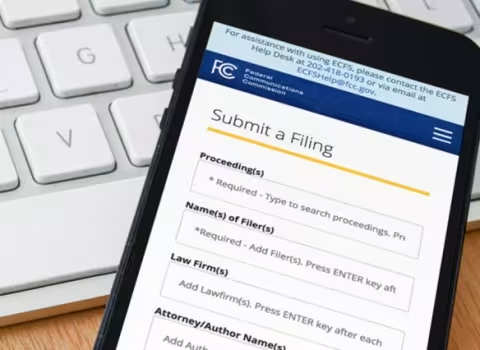
Smartphone displaying a "Submit a Filing" form beside a laptop keyboard.
Body

The challenge

The Federal Communications Commission (FCC) relies on its website to provide regulatory guidance to millions of visitors across various industries. But the old site was hard for users to navigate and frustrating for employees to manage.

In this rapid engagement, CivicActions worked hand-in-hand with the FCC to build a modern, mobile-friendly Drupal website that was more accessible and easier to update.

Client goal

The FCC’s cumbersome, outdated site was not doing its users or internal content managers justice. On top of antiquated technology, the Commission's waterfall processes made it harder for content managers to keep the site updated and relevant for its diverse audiences. The policies and the product needed a refresh.

  • Transition from waterfall to Agile methodology
  • Migrate legacy content from various systems to a modern Drupal Content Management System (CMS)
  • Ease public access to regulatory information through a mobile-friendly web experience
  • Save FCC administrators time and money with more efficient content management
  • Provide reliability and stability by implementing Quality Assurance (QA) testing

Our approach

We had to work fast and our deployment options were limited by security considerations, so we rolled up our sleeves and turned up the collaboration. By implementing a modern Drupal CMS and Agile practices, we helped the FCC modernize its approach to content while avoiding disruptions for users and maintaining a secure environment.

Seamless content migration and management

FCC has a very active user community, so we had to move quickly and avoid disruptions. We performed a massive content migration from Drupal 6 to Drupal 7 and consolidated content from various legacy systems into one CMS. To make the content creation and editing more pleasant and efficient, we added a robust text editor and new access controls. This allowed FCC’s many content creators to manage their own content without compromising the integrity of the site’s design.

The modernized FCC.gov is clean, simple, and easy to use for visitors and agency staff.

Accessible content

The FCC is responsible for the accessibility of 21st Century communications, so there was no room for accessibility errors on its website. We scanned the site for compliance issues and quickly resolved them. The current website serves as a model for Web Content Accessibility Guidelines and complies with Section 508 requirements.

The mobile-optimized user experience lets people do business with FCC from anywhere.

Automatic testing for quality code

Knowing that government websites can be subject to degradation over time as new code is added, we also wanted to help FCC achieve sustainability for their site. We used Behat—a behavior-driven development testing framework that can double as user acceptance test criteria—to make sure all new code worked properly. We configured Behat tests to run automatically whenever new code was merged, ensuring a quality codebase for years to come.

Improved practices for better staff experience

The content editors at FCC were drowning in waterfall processes that didn’t let them respond quickly to evolving needs at the agency. To ease content management and improve the employee experience, we worked with key stakeholders to implement Agile practices. Together we curated priorities, made sure the end result met real user needs, and helped the FCC transition to ways of working better suited to the digital age.

Outcomes

Smooth transition

We performed a massive content migration and consolidation with no disruption to the FCC user community.

Designed for usability

The improved site search and intuitive navigation help visitors quickly find information and resources published by the Commission.

Simplified content management

FCC content creators are equipped with a powerful text editor to update and manage their content without compromising the integrity of the site design.

Accessible for all people

We scanned for compliance issues and made sure the FCC site is usable for people of varying abilities, including those using assistive or mobile technology.

Sustainable, quality code

By implementing automated testing software that scans all new code merges, we set the FCC up for long-term success with code quality baked-in.

Turn-key deployment

Deployment was complicated due to security, so we developed turn-key processes to deploy to production so the IT folks at FCC could do it themselves.

Proof points
Value
69,706
Description

pieces of migrated content

Value
15
Description

minutes for daily agile scrum meetings

Value
19
Description

bureaus and offices housed within FCC

Quote
Quote text
This work will make it easier for both content owners to keep pages updated and for website users to navigate the website and find information.
Quote by

Dr. David Bray | FCC Chief Information Officer (public news release from FCC)